




The Ultimate Guide to a "Battery-Ready Solar System"
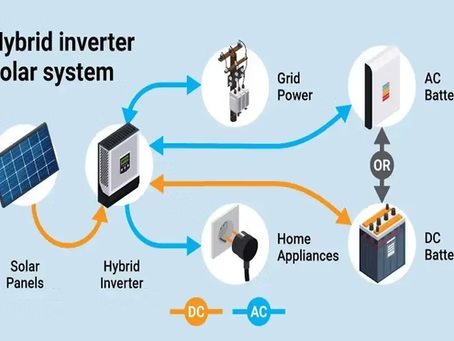
If you're considering solar, you've probably heard about “battery-ready” solar systems. But what does that term mean, and is it worth the investment? Let’s break it down.

Photo Credit: Sigenergy
What Is a Battery-Ready Solar System?
A battery-ready solar system is a solar power setup designed with the future in mind. It’s the kind of system that makes it easy to bolt on a battery down the track. The idea is simple: start with solar panels now, and if/when battery prices drop (or you get sick of grid outages), you can easily add battery storage later.
Here’s the catch: not all systems are truly battery-ready. If your installer uses a standard grid-tied inverter, adding a battery later could mean rewiring, adding another inverter, and generally making things more expensive than they need to be. Hybrid inverters, on the other hand, solve this issue. They manage both your solar panels and future batteries, so you don’t have to pay extra when the time comes to install your new battery system.
Hybrid Inverter: The Key to a Battery-Ready System

If you want a solar system that’s battery-ready, the hybrid inverter is your best choice. Here’s why:
-
Dual Functionality: A hybrid inverter can handle both DC (direct current) from your solar panels and from a battery, converting it into AC (alternating current) for your home. This is different from a standard inverter, which only handles solar energy and feeds it directly into the grid.
-
Cost-Effective Upgrades: By installing a hybrid inverter, you won’t need to purchase a separate battery inverter when you decide to add storage. This avoids rewiring and additional installation fees, saving you a headache (and money).
-
Backup Power: Many hybrid inverters can also offer backup power during grid outages, giving you energy independence when the lights go out for everyone else.
AC vs. DC Coupled Systems
We have discussed the difference between AC and DC system in our previous blog, and this is just a brief review.
-
AC-Coupled: This system is perfect for retrofitting. If you already have solar and want to add a battery later, an AC-coupled system works by adding a separate battery inverter. It’s easier to install but can be slightly less efficient since there are multiple conversions involved (from DC to AC and back to DC).
-
DC-Coupled: More efficient for new installations. This setup charges the battery directly from the solar panels, reducing the number of energy conversions. It’s a better option if you're starting from scratch and planning to go all-in on storage
Why Go Battery-Ready?
Here are several reasons why you should go and install a battery-ready system.
Subscribe to get special offers & updates.
Go To Top
142 Gipps Road, Smithfield, Sydney, 2164
1800 788 638
info@electrifyingaustralia.com.au


Electrifying Australia acknowledges Aboriginal and Torres Strait Islander peoples as the Traditional Custodians of the land on which we operate. We pay our respects to Aboriginal and Torres Strait Islander Elders past, present, and emerging.